
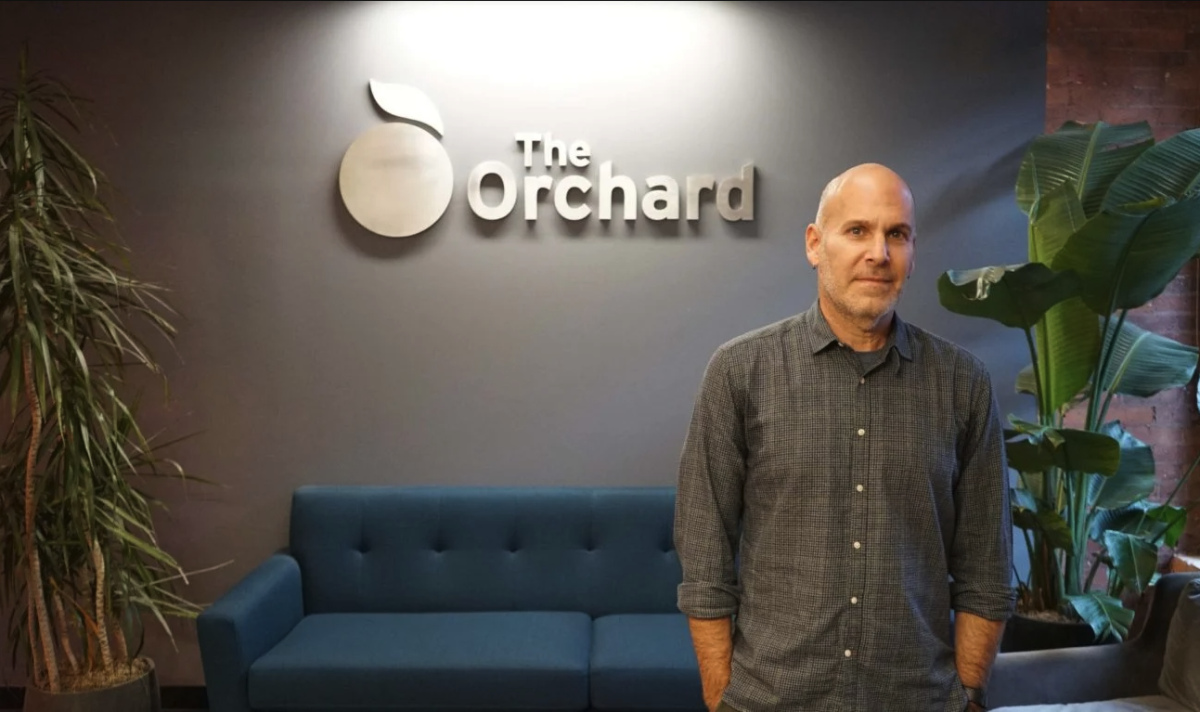
Scott Cohen helped build The Orchard in the mid-1990s — the world’s first digital music distributor, which gave independent artists access to online CD stores before most people had heard of MP3s. Thirty years later, he has written a piece for Hypebot arguing that the music industry needs another revolution: one that moves beyond royalties to give artists, composers, and rightsholders a share of the actual enterprise value their work creates. It is a compelling argument, and the timing makes it more urgent than it might have seemed even twelve months ago. Three developments that landed in the same period — a major labels equity deal, a new songwriter royalty rate proceeding, and a grassroots movement reframing what it means to be a working musician — together describe the full dimensions of the problem Cohen is raising.
The Argument Cohen Is Making
Cohen’s thesis is straightforward. When he and Richard Gottehrer launched The Orchard, the problem was market access: independent artists couldn’t get their music onto store shelves. That problem is now solved. Today’s problem is different and, Cohen argues, bigger: the royalty system was designed to compensate creators for the use of their work, not for the value their work creates for the industry as a whole. The numbers make his point for him. As he notes, music companies have been acquired for vast sums totaling more than $12 billion in the first half of 2026 alone. Songs are building empires. Those empires are being sold for billions. And the artists whose work powered those empires receive their contractual royalty — the same percentage they agreed to when they signed, calibrated to compensate for usage, not for participation in the upside.
“Their compensation stops at royalties,” Cohen writes, “when it should in fact reflect the full economic value they generate.”
He calls the royalty the ceiling, not the floor. He argues the system was designed that way deliberately, by those with an interest in keeping it that way. And he calls for a new model — though his proposals remain deliberately vague, beyond a reference to JKBX, the platform he co-founded that converts song income streams into SEC-regulated securities. The diagnosis is sharp. The prescription is incomplete. But the diagnosis is what matters here, because what has happened in recent weeks makes it considerably more concrete.
What the Labels Already Figured Out
On August 25, Universal Music Group, Sony Music Group, and Warner Music Group all took equity stakes in Stability AI — the generative AI company behind Stable Audio 3.0 — as part of a $76 million Series B funding round, as reported by Music Business Worldwide. It was the first time all three major labels had taken an equity stake in the same AI company simultaneously. The deal brought Stability AI’s total funding to $232 million. The labels joined alongside Electronic Arts, AMD Ventures, Coatue, Greycroft, Sean Parker, and Eric Schmidt.
The mechanics of how this happened are worth holding onto. The major labels spent the better part of 2024 and 2025 suing AI companies for using their catalogs without permission, arguing that their artists’ recordings had been taken without compensation. Those lawsuits gave them enormous negotiating leverage. They used that leverage to extract licensing deals — and, in the case of Stability AI, equity stakes. As TechTimes noted at the time: “Artists Built the Leverage. Labels Are Collecting the Upside.” The catalogs that generated the negotiating power were built on artists’ recordings. The equity that resulted from that negotiating power went to the labels. Artists received their standard recording contract royalties — the ceiling Cohen is describing, not the floor he is arguing for. This is not an accident or an oversight. It is the system working exactly as Cohen says it was designed to work.
It is worth noting that Google is now testing direct payments to selected publishers whose content contributes to its AI-generated answers — a signal, reported by Neon Music, that the model of AI training as a compensable royalty event is beginning to take concrete shape beyond the music catalog deals already struck. Whether that model ever extends to the artists whose recordings underpin those catalogs remains, as with the Stability AI deal, an open question.
The Gap Between Diagnosis and Reality
Cohen’s piece is written as a call to arms — a challenge to the industry to do better, framed around the historical parallel of what The Orchard accomplished in the 1990s. The analogy is useful, but it cuts both ways. When The Orchard opened up digital distribution, the beneficiaries were ultimately independent artists and labels who had previously been locked out of store shelves. The revolution was genuinely democratizing. The next revolution Cohen is calling for — participation in enterprise value — is a much harder structural problem, because the people who would need to give something up to make it happen are the same people who currently control the system.
The $12 billion in catalog acquisitions Cohen cites as evidence of the problem is also evidence of who is winning. PitchBook’s analysis of the music rights investment landscape notes that institutional investors are already moving beyond passive royalty returns — looking to develop catalogs into experiences, brand extensions, and AI licensing opportunities. That evolution is happening. Artists are largely not invited to participate in it. The Stability AI deal is the clearest example yet of what participation in enterprise value actually looks like when it materializes — and who captures it. The labels filed lawsuits arguing that AI companies had stolen from their artists. They settled those lawsuits, took equity stakes, and signed licensing deals that will generate new revenue streams. Whether any of that flows back to the artists whose recordings built the leverage is governed by individual recording contracts — the same contracts with the same royalty structures Cohen is arguing are insufficient.
Phono V: Renegotiating the Ceiling
While the macro debate about enterprise value plays out in investment rounds and boardrooms, a parallel process is now underway that will determine the precise dimensions of that ceiling for the next five years. On October 5, 2026, the parties to the Phonorecords V proceedings submitted their written testimony and rate proposals to the US Copyright Royalty Board — the rate-setting process that will determine how streaming platforms calculate and pay statutory mechanical royalties to songwriters and publishers in the United States from 2028 through 2032, as reported by Music Business Worldwide. The CRB’s final determination is expected by the end of 2027.
The stakes are significant. Phono IV, the preceding settlement covering 2023-2027, raised the headline rate for songwriters and publishers to 15.35% of a streaming service’s US revenue by 2027 — described at the time as the highest rate in the history of digital streaming. But as American Songwriter has noted, the mechanical royalty is only a portion of the total streaming royalty, and the overall structure still directs 75-80% of the total to performing artists and record labels, with the remaining 20-25% going to songwriters and publishers.
The political contours of Phono V are already visible in the opening submissions. The Digital Media Association — the trade body representing streaming services including Spotify, Apple Music, and Amazon — has pointed to 30% growth in publishing revenues since 2022 as an argument against further rate increases, suggesting the current structure is working adequately. Opposite them, the NMPA and Nashville Songwriters Association International are defending a proposed settlement that major labels and publishers describe as “eminently reasonable.” But a coalition of dissenters — including the Songwriters Guild of America, Word Collections, Eminem’s publisher Eight Mile Style, and Stevie Wonder — has continued to push back against the terms throughout 2026.
One of the most significant proposals on the table comes from the Songwriters Guild of America, which calls for replacing the current complex formula with a flat per-stream rate of $0.0030, adjusted annually for inflation. As Alex Heiche argued in a Billboard guest column, the Phono V outcome could reshape catalog valuations for years. The Phono V proceedings are the most concrete near-term arena in which the royalty ceiling Cohen describes can actually be raised. But they are also a reminder of the ceiling’s nature: it can be raised incrementally, through a process that takes years and involves substantial legal and lobbying resources that most individual songwriters don’t have. The structure of the negotiation mirrors the structure of the problem.
The Gap Between the Boardroom and the Studio
While the macro debate about enterprise value and AI licensing plays out in courtrooms and investment rounds, a parallel conversation is happening at the other end of the industry — one that rarely makes the same headlines but describes the same structural failure from a different angle. Writing for Blast, Francesco Carrubba captured the daily reality of what it means to be a musician in 2026: concert tickets as the primary budget line, streaming royalties governed by platform rules the artist didn’t negotiate, studio costs, tour logistics, promotion — all of it now the artist’s own responsibility. “The musician and the artist, increasingly, are not simply creative figures,” Carrubba writes. “They must be CEOs of themselves, and also a little bit accountants and bookkeepers.”
The arrival of digital self-distribution removed the gatekeepers — and simultaneously removed the support structure that came with them. Labels once functioned as incubators, absorbing the costs of recording, manufacturing, logistics, and promotion. The trade-off was onerous contracts and royalty structures that kept artists dependent. The solution — direct access to the market — turned out to come with its own costs, just distributed differently: the artist now bears them all.
Elisa De Matteis, a business consultant and founder of Musicista Imprenditore™, has built her practice around exactly this gap. Her position is that talent alone is no longer sufficient — artists need “strategic vision, marketing skills, effective personal branding, and a business plan.” Crucially, she frames entrepreneurship not as a betrayal of artistic identity but as its protection: “Being an entrepreneur of your own music doesn’t mean distorting art — it means giving it the tools to grow, protect itself, and last.” The cultural resistance she identifies — “the cultural prejudice that separates creativity from entrepreneurship” — is the micro-level expression of the same problem Cohen is diagnosing at the macro level. The distance between the boardroom conversation about who captures the upside of a $4 billion catalog acquisition and the studio conversation about how to calculate streaming royalties and plan a break-even tour is one of the most revealing measures of how the music industry actually distributes its rewards.
JKBX and the Limits of the Alternative
Cohen’s own solution — JKBX, which he co-founded — is worth examining in this context. The platform converts income streams from hit songs into SEC-regulated securities, allowing artists to monetize future royalty income while retaining ownership of their masters and giving fans a financial stake in the music they love. It is a genuinely interesting model, and one that addresses a real gap: artists who need liquidity but don’t want to sell their catalogs outright. But it is a royalty-based instrument at its core — securitizing the royalty stream rather than replacing it with equity participation in the broader value chain. It solves a cash flow problem. It does not solve the structural problem Cohen is diagnosing.
The structural problem would require artists to participate in the upside when a company is sold, when an AI licensing deal is struck, when a catalog becomes the basis of a billion-dollar acquisition. That is a contract negotiation problem as much as a philosophical one — and it would require the labels, publishers, and distributors who currently capture that upside to renegotiate the terms of every deal they make with artists going forward. That is a harder fight than building a digital distributor in the mid-1990s. The internet opened new infrastructure that didn’t exist before. Enterprise value participation requires renegotiating who owns the infrastructure that already exists.
Why Cohen Is Right to Call for a Fight
Cohen’s core observation — that the royalty was designed as the ceiling and that the gap between what creators generate and what they receive has grown dramatically — is supported by the evidence across all three dimensions examined here. At the macro level: labels taking equity in AI companies using leverage built on artists’ work. At the regulatory level: a rate-setting process that can raise the ceiling incrementally, but cannot replace it with something structurally different. At the individual level: working musicians navigating a market that removed its support structures without replacing them with ownership.
The Phono V proceedings are the most immediate arena in which the ceiling can be pushed upward. The Stability AI deal is the clearest recent example of what lies above that ceiling — and who is currently standing there. And the work of practitioners like De Matteis represents the ground-level response to a system that has never been designed with the working musician’s sustainability in mind. What the next revolution needs, as Cohen himself acknowledges, is people willing to bet against the establishment one more time. The difference is that in the 1990s, the establishment was protecting shelf space. Today, it is protecting something considerably harder to democratize: the right to participate in the financial value of culture itself.

Rudy (32) currently based in Bergamo, here since 2019.
https://www.linkedin.com/in/rudy-cassago-522452179/