There is a sentence in a recent MIDiA Research analysis of the music discovery landscape that deserves to be read twice:
Streaming has drifted structurally closer to people’s perception of traditional radio: convenient, pre-programmed playlists, background listening.
Read it again. The format that was supposed to kill radio has become radio. Not the interesting kind — the passive kind. The kind you put on while you cook dinner and don’t really listen to. The kind that plays things you broadly like without ever surprising you. The kind that optimises for not turning you off rather than for turning you on to something new. The irony is structural, and it has consequences that are only now becoming visible in the data.
How Streaming Became What It Was Supposed to Replace
The logic that drove streaming’s early years was simple and seductive: give people access to everything, and they’ll discover more. Scarcity was the enemy. Algorithmic personalisation was the solution. Discover Weekly was going to be your personal radio DJ — one who knew your taste better than any human ever could.
What actually happened was more complicated. As MIDiA’s Laura Fisher argues in her analysis, as streaming matured it optimised for retention rather than exploration. Algorithms learned that familiar music kept people listening longer, and so familiar music is what they served. Discover Weekly became a carousel of sonic siblings — tracks with the same BPM, the same key, the same vocal texture as things you’d already played a hundred times. The library expanded to hundreds of millions of songs. The slice of it most listeners actually heard contracted.
The result, as Fisher puts it, is discovery fatigue. Ubiquity has a ceiling, and audiences — especially dedicated ones — are starting to push against it. Social media, the format that was supposed to fill the discovery void, has largely underdelivered too, drowning out musical artistry by labelling everything “trending audio.” The algorithmic feed didn’t replace the human tastemaker. It replaced the experience of being surprised.
This Is a Scarcity Story, Not a Nostalgia Story
Which brings us to radio — and to a finding that MIDiA frames carefully as a scarcity story rather than a nostalgia story. The distinction matters enormously. A nostalgia story would say: people miss radio because they grew up with it, and they’re romanticising something they can’t have back. A scarcity story says something different: what radio offers — a human on the other end of the signal, a sense of place, the possibility of hearing something you didn’t ask for and couldn’t have predicted — has become genuinely rare. The algorithm didn’t eliminate that experience. It just stopped providing it. And when something becomes rare, it becomes valuable.
The clearest case study is London’s NTS Radio, founded in 2011 in Hackney by Femi Adeyemi. NTS is built on human curation, niche taste-making, and a participatory relationship with its listeners. By December 2025, it had reached 6 million monthly listeners globally — and crucially, around 40% of the music it plays is not available on Spotify. That last figure is the key one. NTS isn’t competing with Spotify on catalogue. It’s offering something Spotify structurally cannot: music that exists outside the algorithmic loop, chosen by humans who care about what they’re putting on. In June 2023, Universal Music Group acquired a stake of between 25% and 50% in NTS — which tells you everything you need to know about how seriously the industry is taking the revival of human-curated radio as a cultural force.
Gen Z and the Analogue Signal
The radio story doesn’t stand alone. It connects to a broader pattern that MIDiA Research’s Hanna Kahlert has identified in her analysis of Gen Z’s relationship with older technology: the return to analogue formats is not driven by nostalgia, but by convenience, habit, and quality of experience. These are the same three drivers that explain the vinyl revival, the cassette renaissance, and — increasingly — the renewed interest in radio.
What connects all three is the same underlying logic the MIDiA radio piece identifies: when infinite digital choice becomes the default, the act of choosing a format that is deliberately limited becomes meaningful. A vinyl record plays what’s on it and nothing else. A radio show plays what the DJ chose, not what the algorithm predicted you’d tolerate. Both offer something streaming cannot: a constraint that forces attention, and a human somewhere in the chain who made a decision about what you’d hear. This is a generation that grew up with infinite choice available at zero friction. The idea that scarcity could feel like a feature rather than a bug is not counterintuitive to them — it’s just a different kind of optimisation. Not for content volume, but for listening quality. Not for retention, but for experience.
What Spotify Is Learning From This
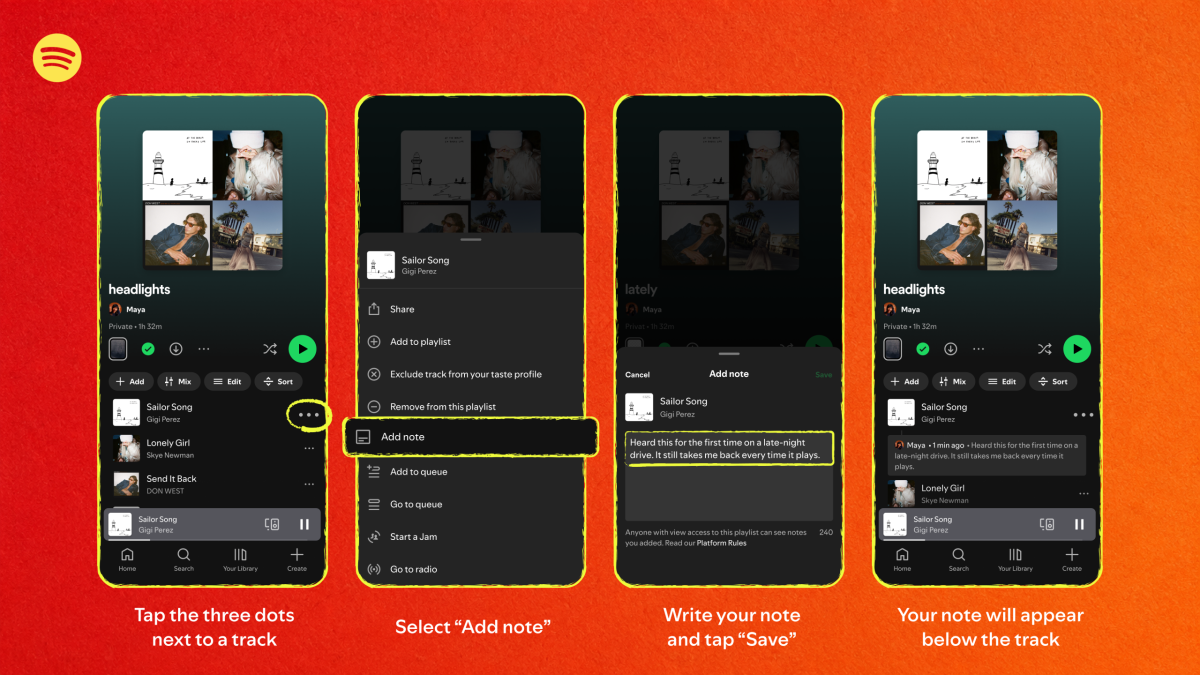
Spotify, to its credit, appears to be paying attention. In August 2026, the platform launched User Notes — a feature that lets listeners add personal captions and memories to songs in their own playlists, turning a playlist into something closer to a personal listening diary. The feature doesn’t affect royalties or algorithmic placement, but its existence signals something: Spotify recognises that the purely algorithmic, purely frictionless listening experience has left something out, and that the “something” is human context. It’s a small gesture. It doesn’t solve the discovery problem. But it suggests the platform understands that what listeners are pushing toward is not more music, more accurately predicted — it’s music that means something, in a context that feels human. The algorithm can surface a song. It cannot give that song a story.
The Industry’s Discovery Problem Is Also Its Opportunity
What MIDiA’s radio analysis identifies as a problem for streaming is simultaneously an opportunity for anyone willing to build something that works differently. Human-curated editorial playlists, specialist radio stations, niche genre platforms, artist-led newsletters, physical listening events — all of these are growing precisely because algorithmic streaming has optimised itself into a corner.
The numbers tell the story: NTS at 6 million monthly listeners and growing, vinyl sales surpassing $1 billion in wholesale revenue in 2025 for the first time since 1983, and now research suggesting that radio — not as it was, but as it could be reinvented — may be the most credible discovery engine left for listeners who actually want to find new music rather than be served more of the same. As Fisher’s conclusion puts it: the answer may not require inventing something new so much as re-investing in something that never actually left. The infrastructure for meaningful music discovery already exists. It just stopped being where the money went for a decade. That decade appears to be ending.

Rudy currently based in Bergamo, here since 2019.
https://www.linkedin.com/in/rudy-cassago-522452179/