There is a version of this week’s music industry news that looks like chaos. Sony Music Publishing and Warner Chappell sue Anthropic for what they call one of the largest intellectual property thefts in history. Universal and Sony update their copyright lawsuit against Suno with stream ripping allegations that could push damages to $9.1 billion. Australia blocks fully AI-generated tracks from its official charts. And then, in the same seven-day window, all three major music companies — Universal, Sony, and Warner — invest $76 million in an AI company.
If that looks like a contradiction, you’re reading it wrong. It is a strategy. And this week, it became clearer than it has ever been.
The Anthropic Lawsuit Completes the Picture
On August 28, Sony Music Publishing and Warner Chappell Music filed a joint copyright lawsuit against Anthropic — home of Claude — in the US District Court for the Northern District of California. The complaint, obtained by Music Business Worldwide, names not just the company but its Co-Founder and CEO Dario Amodei and Co-Founder Benjamin Mann as individual defendants. The filing alleges that Anthropic unlawfully harvested tens of thousands of copyrighted musical compositions — including works like “Ain’t No Mountain High Enough,” “All I Want for Christmas Is You,” “Eye of the Tiger,” “Livin’ On a Prayer,” “Hallelujah,” “Uptown Funk,” and Taylor Swift’s “Paper Rings” — to train its Claude AI models, and that Claude reproduces those lyrics verbatim in its outputs.
The complaint details a pattern of conduct that leans heavily on findings from the parallel Bartz v. Anthropic authors’ case: in June 2021, Mann used BitTorrent to download at least five million pirated books from Library Genesis, and Anthropic employees torrented at least two million more from Pirate Library Mirror in July 2022. The filing quotes Mann’s own internal description of LibGen as “sketchy AF”, and a 2024 Anthropic planning document describing their scanning operation with the line: “We don’t want it to be known that we are working on this.” The publishers are seeking statutory damages of up to $150,000 per work willfully infringed, placing Anthropic’s theoretical exposure in the multi-billion-dollar range. They are also demanding destruction of all infringing copies and a full account of Claude’s training data. Amodei and Mann are named personally on counts of direct and contributory infringement related to the torrenting.
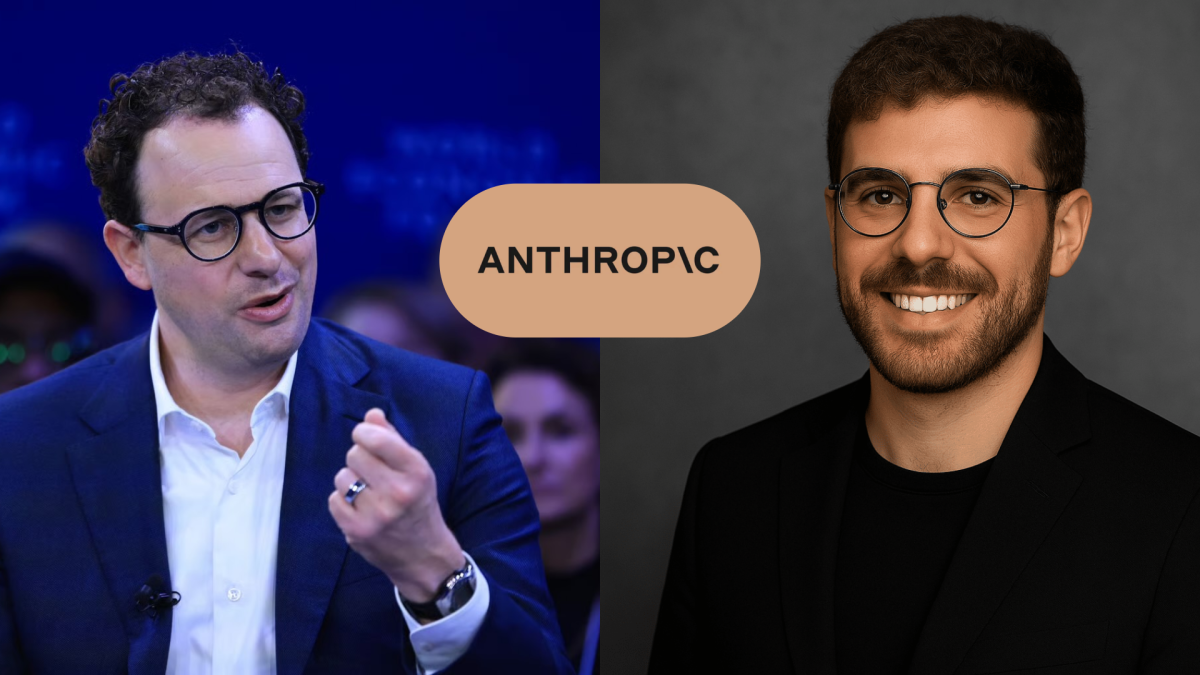
The complaint takes direct aim at Anthropic’s self-positioning: “Despite branding itself as the ‘ethical AI company’, Anthropic has repeatedly acted in ways that belie that image, prioritizing competitive advantage over compliance with the law.” It also notes that Anthropic’s $1.5 billion settlement with book authors — agreed in September 2025 over the same torrenting conduct — clearly hasn’t been sufficient deterrent, given that the company’s valuation has since reached an estimated $2 trillion ahead of a projected October IPO. The SMP/WCM lawsuit brings a particular symmetry to the legal landscape. Universal Music Publishing Group, Concord, and ABKCO had already filed two separate suits against Anthropic — the first in October 2023 covering roughly 500 songs, the second in January 2026 covering more than 20,000 works and seeking over $3 billion. BMG filed a third case in March 2026 over 493 compositions. Round Hill Music filed a fourth on August 17. Now Sony Music Publishing and Warner Chappell have filed the fifth. The publishing arms of all three major music companies are now in active litigation against the maker of Claude.
The Suno Case Gets Sharper
While the Anthropic filing dominated headlines, a parallel development in the Suno case may carry equal long-term significance. On August 26, Universal Music and Sony filed an updated version of their copyright lawsuit against Suno, adding the stream ripping allegations that courts had blocked them from including since last September. As reported by CMU’s Chris Cooke, the amended complaint alleges that Suno acquired many — if not all — of the copyrighted sound recordings in its training data by illicitly downloading them from YouTube via stream ripping, circumventing the platform’s technical protection measures in violation of Section 1201 of the US Digital Millennium Copyright Act.
The legal significance is precise. In the parallel Bartz v. Anthropic case, a judge accepted that AI training could constitute fair use under US copyright law — but only when the training data was legitimately sourced. Anthropic had used pirated books, which negated the fair use defence and produced the $1.5 billion settlement. Universal and Sony are now making the same argument against Suno: if the recordings were ripped illegally from YouTube, fair use doesn’t apply.
Judge F. Dennis Saylor declined to allow the majors to simultaneously increase the number of named infringing works from 560 to 61,026 — citing complexity and prejudice to Suno at this stage of proceedings. Had he allowed it, potential damages would have exceeded $9.1 billion. But he noted that the majors could simply file a second, separate lawsuit covering those additional tracks — which, given the precedent with the parallel Udio case, they almost certainly will. The stream ripping amendment tightens the legal vice around Suno’s fair use defence in a way that the original complaint could not. It shifts the argument from “was AI training fair use?” — an unsettled question — to “did Suno start with legitimately sourced material?” — a question with a much more straightforward answer if the stream ripping allegations hold.
Australia Moves First
While the US courts work through these questions at litigation pace, regulators and industry bodies elsewhere are moving on a different timeline entirely. On August 25, the Australian Recording Industry Association announced that wholly AI-generated recordings would be barred from the ARIA Charts, effective from the chart dated August 31 — published August 28. As reported by Music Business Worldwide, ARIA’s updated Code of Practice implements the IFPI’s global principles, establishing that a recording is chart-eligible only if it is “substantially human made,” raises no stream or chart manipulation concerns, and complies with applicable copyright laws. Recordings that use AI in a supporting role — mastering, stem separation, AI drum machines, AI instrument patches played by a human — remain eligible. A lead vocal generated by AI makes a track ineligible outright, as does any key instrumental component.
ARIA CEO Annabelle Herd’s formulation was succinct: “A human using tools is one thing. A performance without a human is another.” She also called on radio stations to implement similar changes to their own codes — extending the principle beyond charts into broadcast. What ARIA has done that no other body has done yet is bind chart eligibility and awards eligibility together. A recording ruled ineligible for the ARIA Charts is automatically ineligible for an ARIA Award — including the return of any ARIA #1 Award previously granted. The Recording Academy updated Grammy rules in 2023 to exclude works containing no human authorship, but left charts separate. ARIA has integrated both into a single framework.
ARIA notably did not apply the IFPI’s requirement that any AI service used must be “properly authorized and lawful” — citing the rapidly developing state of licensing between major music companies and AI platforms. It is a careful carve-out that acknowledges the system isn’t yet settled enough to make authorization status a hard rule.
The Other Side of the Ledger: $76 Million into Stability AI
And then there is the investment. On August 25 — the same day ARIA announced its chart rules — Music Business Worldwide reported that Universal Music Group, Sony Music Group, and Warner Music Group had all joined a $76 million Series B funding round in Stability AI, the generative AI company behind Stable Audio 3.0.
The three majors join a coalition that includes Electronic Arts, AMD Ventures, Pacific Alliance Ventures, Coatue, Greycroft, and individual investors including Sean Parker and Eric Schmidt. Universal and Warner had previously signed strategic partnerships with Stability AI in October and November 2025 respectively. The Series B brings Stability AI’s total funding under CEO Prem Akkaraju to $232 million.
The key detail is what Stability AI’s capital will be built on: Stable Audio 3.0 is trained on licensed data. The company’s stated position is that “artist-centric AI will only win if the product experience on a licensed platform is better than the experience on an unlicensed platform.” The majors are betting $76 million that this is true — and that the licensed model is commercially viable enough to make the legal battles against the unlicensed competition worth fighting.
The Strategy, Stated Plainly
Read together, this week’s four developments describe a coherent position that the major labels have now committed to in full public view. They are litigating aggressively against AI companies that used their catalogues without permission — Anthropic, Suno, Udio — while simultaneously investing in and partnering with AI companies that are building on licensed data. The lawsuits are not anti-AI. The investments are not naive. Both are expressions of the same underlying demand: that AI development in music happens with permission, with payment, and within a framework that the rights holders helped design.
Sony Music Publishing and Warner Chappell said it plainly in their Anthropic complaint: “Music Publishers recognize the potential of ethical AI technology, and they have entered licenses permitting the authorized use of their musical compositions in connection with AI. Even the most revolutionary of technologies must develop within the bounds of the law”.
The distinction the industry is drawing — between licensed AI and unlicensed AI — is the same distinction ARIA drew in its chart rules, the same distinction Stability AI is building its business around, and the same distinction that European courts have started to enforce since the GEMA ruling against Suno in July. Whether the strategy holds depends on outcomes in multiple courtrooms simultaneously, on the speed at which licensing frameworks can be standardized, and on whether the commercial advantages of licensed platforms prove sufficient to push the market away from cheaper unlicensed alternatives. None of that is settled.
What is settled is the direction. The major labels are no longer arguing about whether AI should exist in music. They are arguing, in court and in boardrooms at the same time, about who gets to profit from it.

Rudy (32) currently based in Bergamo, here since 2019.
https://www.linkedin.com/in/rudy-cassago-522452179/