After spending more than a decade redefining the harder edges of the techno scene through HEX, Lorenzo Raganzini opens a new chapter in his career with Techno Rebels, his debut solo album. A deeply personal project born from the need to transform chaos, change, and introspection into sound. More than just a record, Techno Rebels feels like a statement of identity: a return to a more physical, immersive and profound vision of techno, far from the constant BPM escalation that has dominated clubs, festivals and social media in recent years. Industrial textures, acid influences, hypnotic grooves and traces of ‘90s rave culture coexist within a body of work centered around authenticity, emotion and creative freedom. We spoke with Lorenzo Raganzini about artistic evolution, identity, contemporary techno culture and what it truly means to be a “rebel” today.
- One year after the end of HEX, how much has changed for Lorenzo Raganzini? Did you question yourself and lay new foundations, or is this simply the natural evolution of your career?
The end of HEX was the beginning of a new adventure, but also the trigger for many existential questions. I dedicated 11 years of my life to that beautiful project and its community, so when it ended I felt a huge void and the need to channel all that energy somewhere. I turned it into music. That’s how Techno Rebels was born. Intentionally without collaborations: I wanted only one voice, mine. It’s my sonic outlet, a scream transformed into rhythm and melody. The story of the last few years frozen into sound.
- I was really struck by the demo submission guidelines for your new record label, where identity seems to be the main quality you’re looking for. In particular, the concepts of “made for the dancefloor” and “physical groove” stood out to me. Can you tell us more about this new project? And would you like to leave some personal advice for future applicants?
With pleasure. The label is a return to my roots, to the kind of techno that made me fall in love with clubs before these more extreme recent years. A techno without subgenres, made for the dancefloor, with a physical, deep and constant groove. Music designed for people who want to dance for hours, to get lost or find themselves. Less focus on big moments made to be filmed, more focus on the journey. I felt the need to slow down the BPMs while finding more groove, more depth and more physicality. To producers, I’d say this: if you have good techno between 138 and 145 BPM, with driving groove, strong identity and unexpected stereo sound details, send me your demos — I’d love to hear them. You can find the submission link on my Instagram.
- You are undeniably among the pioneers of the harder techno movement that now dominates festival mainstages and social media alike. How do you view this evolution compared to the beginning of your career, and what do you think its transformation could be over time? Has something perhaps been “lost” in today’s techno landscape?
My style has always been evolving. In recent years it became faster and more intense, until it reached a breaking point. Around me, I saw BPMs getting higher and higher, almost like a competition to play harder than the DJ before you. But if a warm-up starts at 160 BPM, then what’s left afterwards? It shouldn’t be a competition about who pushes the hardest. As DJs, we are there to make people feel something, not to win an ego contest. I realized that scene was no longer aligned with what I was personally searching for, so I chose to return to a more constant and deeper sound, something built for connection and long nights. My manager says that from a business perspective it’s madness, but I never started this journey for anything other than love for music. To me, that’s what being rebellious means.
- Techno Rebels has just been released, and I perceived it as a very multifaceted album — noisily organic, but also tribal and evocative. I heard a lot of industrial influences, plenty of acid, and even a sense of nostalgia. Would you agree? Can we consider it your new manifesto? What message do you want to communicate to today’s techno scene?
I really like this interpretation, honestly. Yes, all of that is inside the album. Industrial, acid, nostalgia, rave culture, emotions. It’s a very human album, born from real moments of my life. More than a manifesto, I see it as a sincere photograph of who I was in that exact moment. My music changes constantly, just like I do. Every day we wake up slightly different because of the experiences of the previous day. I don’t want to limit that evolution or over-explain it. Music guides me, I simply follow it. If there’s a message, maybe it’s this: do what truly makes you happy, not what simply seems to work.
- A reflection on Lorenzo Raganzini’s identity: you’ve always stood out for a very strong personal aesthetic. Does this aesthetic reflect your music, or does your music reflect your aesthetic?
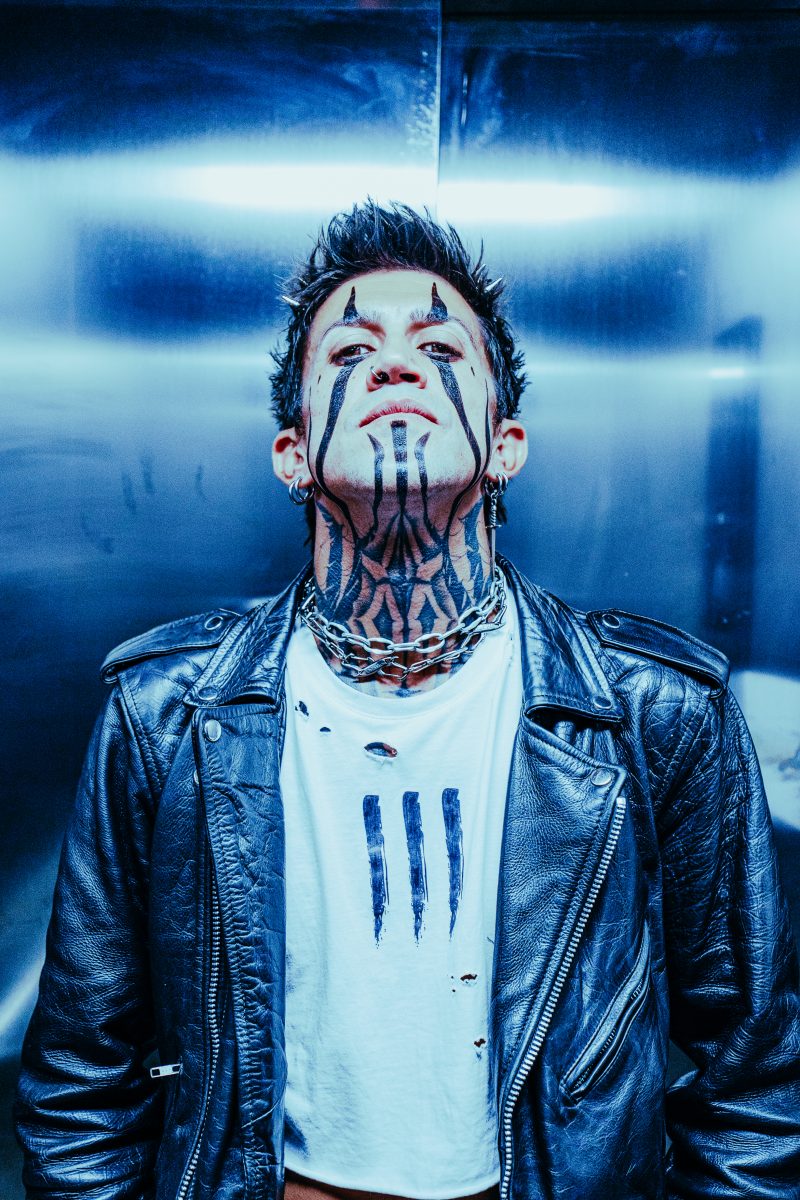
Honestly, I really enjoy playing with my body and transforming myself. Tattoos, piercings, makeup… I’ve always experienced it in a very spontaneous way, without overthinking it. That lined makeup, for example, originally came from the visual extension of the Techno Rebels artwork. But today I feel the need to shift the focus. Less attention on me and my image, more attention on the music. So yes… maybe no more makeup!
With Techno Rebels, Lorenzo Raganzini is not simply searching for a new beginning — he’s searching for a new connection. With himself, with the dancefloor, and with that deeper emotional side of techno that, over the years, seems to have slowly disappeared beneath the race for excess. The result is an album that refuses compromise and temporary trends, choosing authenticity, groove and emotional depth instead. A quiet rebellion, perhaps — but precisely for that reason, an even more necessary one.