There’s something that happens when you step into the world of SkorpioKlub: the music, the aesthetics, and the dancefloor energy all seem to belong to the same story. Behind this project is Stereoliez, a producer and DJ who in recent years has started to build one of the most interesting identities in Italy’s new club scene.
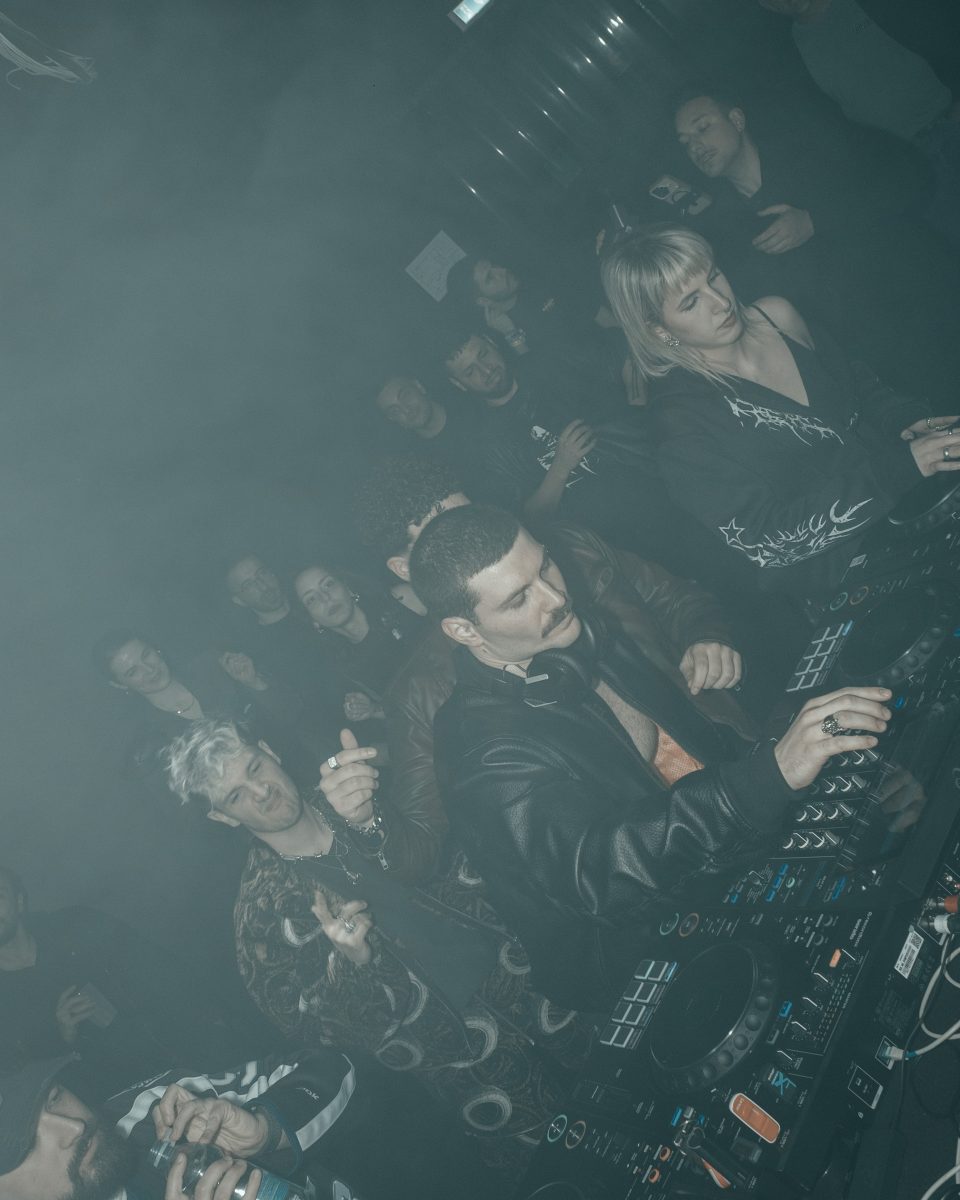
On March 8th, this vision took shape in the ClubRoom at Gate in Milan. A compact club room, almost compressed: an intimate space where the distance between the booth and the dancefloor is minimal, and the energy seems to build up until it explodes. Here SkorpioKlub found a natural setting, where music, aesthetics, and community merge into a single narrative.
In this scenario, Stereoliez wasn’t simply the DJ leading the night, but the balancing point of a broader project: a fully rounded creative universe that often takes shape even outside conventional clubs and lives strongly in the visual, technological, and digital dimension that accompanies every event. The event didn’t revolve around a single headliner, but around a lineup conceived as a true ecosystem of talent, with DJs
taking turns at the booth, often sharing it in spontaneous back-to-back moments that turned the set into a continuous flow of energy. The dancefloor responded at the same pace: close, compact, completely immersed in the sound. What also stood out was the booth setup. Stereoliez chose an unconventional configuration: the XDJ-AZ in the center, flanked by two CDJ-3000X, while on headphones he used the HDJ-F10 with SonicLink technology by AlphaTheta, for completely wireless monitoring. In such a compact room, where DJ and crowd practically share the same space, the absence of cables became almost part of the experience. In the afternoon, shortly before doors opened, we met Stereoliez to talk about his journey in production and the vision he’s building inside and outside the club.
https://youtube.com/shorts/PYeMV3yNoms?si=IWVJaPnvr9Xx5FUb
Di seguito l’intervista con il nostro founder Matteo Villa:
Matteo: SkorpioKlub sembra più di una semplice format: ha un’estetica precisa, un’identità visiva, un suono riconoscibile, ma ci è sembrato quasi più un universo creativo. Da dove nasce questa esigenza e come ci sei riuscito?
Stereoliez: I’ve never thought of SkorpioKlub as a format; it comes from the need to give my music a more complete form, as a way to show what I had become artistically. For me, SkorpioKlub isn’t just the single DJ set but also everything around it: visual imagery, atmosphere, the type of crowd, the energy of the night. I really felt the need to give all of this a more precise shape and build a project that could bring these dimensions together with a very clear identity.
Matteo: Tu però non sei solo il DJ del progetto: sembri anche l’art director. Quanto lavori direttamente su estetica, video e identità visiva?
Stereoliez: With Skorpioklub I tried to put all of myself into it and exactly what I had in mind. The big stroke of luck was also finding, in addition, a small team of people around the project who support and fully expand my ideas. I think that today a music project needs a broader vision. Music remains the center, but the imagery you build around it is what makes a project truly recognizable, and with Skorpioklub that’s the first thing I focused on.
Matteo: Se torniamo indietro alla tua carriera: hai pubblicato release come “MollyBreath” su Confession e altre su Hysteria Records, Night Service Only, Buygore, Generation Hex, Sans Merci e molte altre, ricevendo il supporto di artisti del calibro di Skrillex, Diplo, Zedd, Dj Snake, Tchami. Quali sono state le soddisfazioni più grandi e le sfide più toste che hai vissuto come produttore lavorando con queste etichette?
Stereoliez: Definitely when some tracks started getting international support. When you hear one of your tracks played by artists you’ve been following for years, you realize something is really happening. It’s a very powerful feeling. It definitely puts you in front of very high standards. Every label has a precise sonic direction and very clear expectations. You have to find a way to dialogue with that vision without losing your identity. At the same time, working with international labels also means dealing with very specific expectations: release timing, feedback, revisions. It’s a process that challenges you, but also helps you grow a lot. It’s kind of the ultimate test that lets you understand that what you’re doing is starting to work.
Matteo: L’evento al Gate è stato particolare anche per un altro motivo: sembrava quasi un ritorno alla dimensione più pura del club. Una sala raccolta, il pubblico molto vicino alla console e una line-up che si alternava spesso in back-to-back. Era una scelta precisa?
Stereoliez: Yes, because I wanted to recreate exactly that kind of energy. When the crowd is close to the booth and the DJs share the space, more spontaneous things happen. Back-to-backs create very free moments, and they’re often the ones that stay with you the most.
Matteo: A colpire durante la serata era anche il setup: una XDJ-AZ al centro affiancata da due CDJ-3000X. È una configurazione che usi spesso?
Stereoliez: No, but I tested the XDJ-AZ a lot in the studio and it’s super convenient for events like this, because you have everything in a single system: four standalone channels, a big screen, and your library ready on USB. In a club you can use it on its own or as the heart of the booth and expand it with players. It’s a setup that gives you a lot of freedom. Another interesting thing is
that SonicLink technology is integrated directly into the console, which is really convenient because it simplifies everything. You get to the booth, turn on the headphones, and you’re ready. Fewer cables, fewer things to connect, and fewer chances of problems during the set.
Matteo: Esatto, abbiamo notato subito durante il soundcheck che suonerai con cuffie senza cavo, wireless. Per molti DJ eliminare il cavo è ancora quasi un tabù. Come ti sei trovato?
Stereoliez: At first I was curious but a bit skeptical, because the first thing you think about is latency. But with SonicLink the feeling is very similar to using a cable: monitoring is immediate and very stable. After a short while you completely forget you’re wearing wireless headphones.
Matteo: In una sala come quella del Gate, con il pubblico praticamente attaccato alla console e il volume molto alto, l’isolamento diventa fondamentale.
Stereoliez: Exactly. And something that also impressed me about these AlphaTheta headphones is that even with a very loud room you can clearly hear the track you’re preparing. This lets you work on the mix with precision without having to turn the headphone volume up too much.
Matteo: Queste cuffie però non sembrano pensate solo per il club. Le usi anche nella vita di tutti i giorni, in studio ad esempio?
Stereoliez: Yes, and that’s something I really like. In the studio I use them to prepare music because the sound is very precise. In the club they work great for monitoring, and when I travel or I’m out and about I can easily use them in Bluetooth to listen to music. In the end they become a tool that follows you through different moments of the day.
Matteo: Restiamo in tema tecnologia: che idea ti sei fatto dell’impatto degli strumenti di AI nella music production? Secondo te stanno alzando l’asticella creativa o rischiano di appiattire il suono?
Stereoliez: I think it depends a lot on how you use them. They can be useful tools to generate ideas or make quick sketches, but the creative part always remains with the artist. If used well they can speed up some steps in the workflow, but the risk of homogenization exists if you rely too much on technology.
Matteo: E visto che sei già un produttore piuttosto esperto, quando produci, parti più spesso da drums e groove, da un hook melodico o da una reference? E qual è il tuo workflow tipico in studio?
Stereoliez: I usually start from the groove. If the rhythmic foundation works, everything else comes more easily. Then I work on a distinctive element—an hook or a particular sound—and build the track’s energy around it. A fundamental step for me is always testing tracks at the booth: when they work in the mix with other tracks, you really understand if they’re ready.
Matteo: Ultima domanda. Se pensi al futuro — sia per te che per SkorpioKlub, cosa ti piacerebbe costruire nei prossimi anni?
Stereoliez: I’d like to keep developing the project while maintaining this creative freedom. Making music, bringing it to clubs, but also continuing to build an imagery around what I do. If Skorpioklub can grow while keeping this identity, then we’ll be on the right path. The goal is to make it more and more a meeting point between music, imagery, and community—a project that keeps evolving.